
HUD Proposes a FFRMS Rollback. What’s At Stake?
On July 10, 2026, HUD published a proposed rule that would effectively roll back the most consequential floodplain management regulation it has issued in decades.
The rule would undo most of the April 2024 final rule that implemented the Federal Flood Risk Management Standard (FFRMS) across HUD programs.

A Quick History: How We Got Here.
What Was So Confusing About the 2024 FFRMS Rule?
Practitioners raised serious concerns during the 2024 rulemaking comment period, and the complaints were well-founded.
All Chapter 15 Section 8 Renewals with Capital Repairs, including non-FHA were required to comply with the new FFRMS as of January 1, 2025.
At a minimum, this meant stepping through a new and half-baked process to determine the FFRMS floodplain:
Use the HUD approved CISA maps (not available and would NOT be available by January 1, 2025).
Use the 500-year floodplain where it is mapped on FEMA FIRMs (not available for majority of US, and requires careful review of FIRM and Flood Insurance Study to distinguish between where 500-year floodplain is not present versus not mapped)
Use Freeboard Value Approach (FVA), which relies on either Base Flood Elevations (BFE) plus two feet OR where BFEs are unavailable, using USGS topo maps to estimate BFEs
For existing HUD-assisted multifamily properties, the consequences were even more acute.
As HUD itself now acknowledges, the majority of properties in its portfolio that sit in the FFRMS floodplain are garden-style developments that are physically difficult or impossible to elevate.
In other words, a majority of the HUD portfolio would be impossible to finance for rehab or preservation.
What the Proposed Rule Would Do
Revert to the 1% Annual Chance Floodplain Standard
The most significant change: HUD would return to using the standard 1% annual chance (100-year) floodplain as defined by FEMA for purposes of the 8-step decision-making process under 24 CFR Part 55. The CISA approach — and the entire FFRMS floodplain hierarchy — would be eliminated.
Scrap the Elevated Elevation Requirements for Single-Family Housing
The 2024 rule required the lowest floor of new one-to-four-unit FHA-insured and public housing construction to be built two feet above base flood elevation. This proposed rule would eliminate that requirement, returning to the longstanding standard of building at or above the BFE (consistent with NFIP requirements). The codification of HUD's 2025–2026 waivers reflects this intent.
Preserve Some Improvements from the 2024 Rule
Not everything from 2024 gets cut. HUD proposes to retain several provisions it considers genuinely useful:
Floodway flexibilities (§ 55.1(c)): Expanded flexibility for HUD assistance in floodways, and a new "alternate processing" pathway (§ 55.29) for existing HUD-assisted properties that cannot be practically relocated.
Updated terminology: "1% annual chance floodplain" (instead of "100-year floodplain"), "0.2% annual chance floodplain" (instead of "500-year floodplain"), Coastal A Zone, and impervious surface area definitions are retained for clarity.
Categorical exclusion for minor rehab (§ 50.20(a)(2)(i)): The 2024 expansion of the categorical exclusion for minor rehabilitation of 1-to-4-unit properties in floodplains is kept
Small-scale infrastructure exception: A streamlined path for streets, curbs, and gutters that avoids the full 8-step process.
Online public notice option: Public notices can be posted on government websites as an alternative to local newspaper publication.
Decision-making process clarifications: aligning with the original intent of Executive Orders 11988 and 11990.
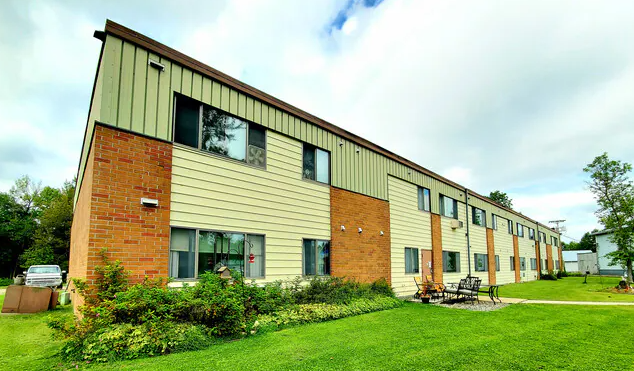
What This Means for PBRA and Affordable Multifamily Owners
Substantial rehabilitation and preservation deals just got significantly easier.
The rescission eliminates the FFRMS floodplain hierarchy, meaning your environmental review is back to the standard FEMA 1% annual chance boundary. Deals that were stalled or structured around this risk can move forward. §§ 24 CFR 55, 200
FHA-financed preservation and LIHTC deals see real compliance simplification.
Any transaction involving an FHA-insured mortgage that triggers a Part 55 environmental review benefits from the restored framework. The three-tiered FFRMS determination hierarchy is gone. §§ 24 CFR 50, 55, 58, 200; 24 CFR 200.926d(c)(4)
Existing HUD-assisted properties in or near floodways now have a structured relief valve.
The retained alternate processing pathway gives HUD a formal mechanism to approve continued assistance for existing PBRA and public housing properties that sit in floodways and cannot be practicably relocated. § 55.29
What to Watch
This is a proposed rule, not final. The 60-day comment period closes September 8, 2026. Several dynamics are worth tracking:
Litigation risk. The 2024 FFRMS rule was supported by environmental and climate advocacy organizations.
Retained provisions. While the core FFRMS rollback is straightforward, the retained provisions from 2024 represent meaningful changes from the old regulatory framework. These are not a full reversion to pre-2024 rules.
NFIP alignment. The proposed rule's explicit codification of NFIP elevation requirements for non-critical actions is new regulatory text. Practitioners should be aware that the baseline elevation standard (BFE) remains in place.
Critical actions. The 0.2% annual chance floodplain standard for critical actions (hospitals, housing for vulnerable populations) remains in place.
Comments are due September 8, 2026. They can be submitted electronically at regulations.gov (reference Docket No. FR-6527-P-01) or by mail to HUD's Regulations Division.